Not sure if Invisalign or braces are right for you? An Invisalign dentist in Pasadena at Blue Door Dental can help you decide. Read this first.
Choosing between Invisalign and braces isn’t as simple as picking the one that looks better. Both straighten teeth. Both work. But they work differently, suit different situations, and come with distinct trade-offs that matter a lot depending on your lifestyle, your bite, and what you’re hoping to achieve.
If you’re weighing your options and feeling stuck, you’re not alone, this is one of the most common conversations happening in dental offices right now. Here’s a clear, honest breakdown of both.
How Each Treatment Works
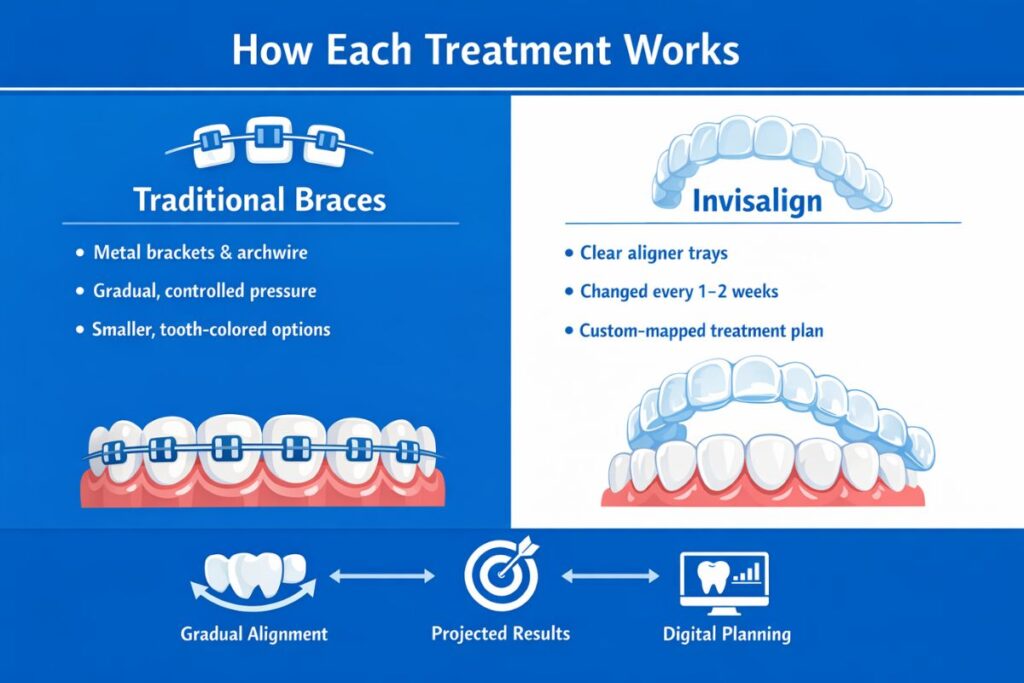
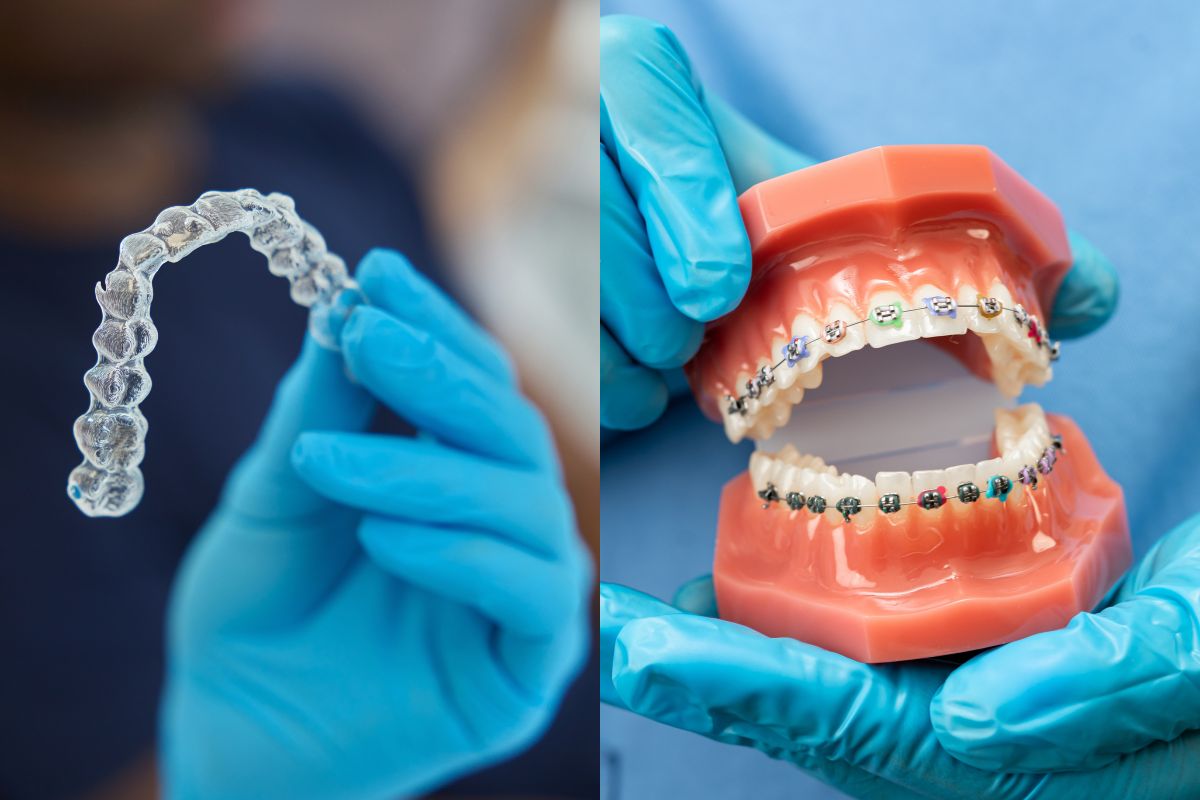
Traditional braces use metal brackets bonded to each tooth, connected by an archwire that’s periodically tightened. That consistent, controlled pressure gradually shifts teeth and corrects bite alignment over time. Modern braces have come a long way – they’re smaller and more precise than older systems, and tooth-colored ceramic options exist for patients who want a less conspicuous look.
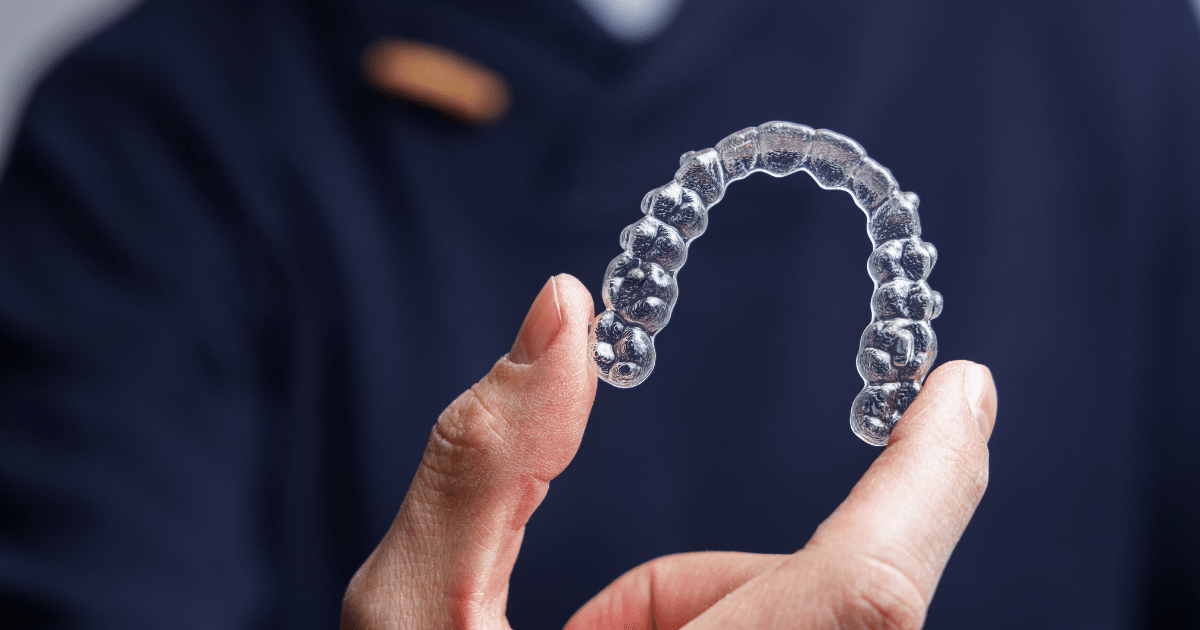
Invisalign uses a series of custom-made clear aligner trays, each worn for about one to two weeks before progressing to the next. The trays apply targeted pressure to specific teeth at specific stages, moving them incrementally toward the planned final position. The full series is mapped out digitally before treatment begins, so you can see a projected outcome before you start.
Patients working with an Invisalign dentist in Pasadena at Blue Door Dental get a detailed digital scan of their bite and teeth at the outset – no messy impressions, along with a 3D treatment preview that shows the expected movement from start to finish.
Where Invisalign Has the Clear Advantage
For most adults and older teens, Invisalign’s biggest selling point is obvious: the trays are nearly invisible. Unless someone is looking closely, most people won’t know you’re in orthodontic treatment. For professionals, people who present publicly, or anyone who’d rather keep their treatment private, that matters.
Beyond appearance, a few other practical advantages stand out:
- No food restrictions. With braces, sticky, hard, and chewy foods are off-limits for months or years. Invisalign trays come out before you eat, so your diet stays exactly the same.
- Easier oral hygiene. Brushing and flossing around brackets and wires is genuinely difficult. With Invisalign, you remove the trays, brush and floss normally, then put them back in. Gum health tends to stay stronger throughout treatment as a result.
- Fewer emergency appointments. Broken brackets and poking wires are a regular part of life with braces. Invisalign trays rarely cause these kinds of disruptions.
- More predictable scheduling. Invisalign checkups tend to be shorter and less frequent than traditional adjustment appointments, which fits well into a busy Pasadena schedule.
Where Braces Still Have the Edge
For all of Invisalign’s advantages, braces handle certain clinical situations better and it’s worth being honest about that.
Severe crowding, significant bite issues (such as large overbites, underbites, or open bites), and cases involving substantial tooth rotation often respond better to traditional braces. That’s because braces are fixed; they work on your teeth 24 hours a day, without relying on patient compliance.
That last point matters more than people expect. Invisalign requires you to wear your trays for 20 to 22 hours per day, every day. Take them out too often, forget to put them back in after meals, or leave them out during social situations, and your treatment will slow down or stall. For patients who are confident they’ll wear them consistently, this isn’t an issue. For others, braces remove the variable entirely.
Braces also tend to work faster for complex cases, and they can be more cost-effective for longer treatment plans depending on the specifics.
What Pasadena Patients Are Opting For
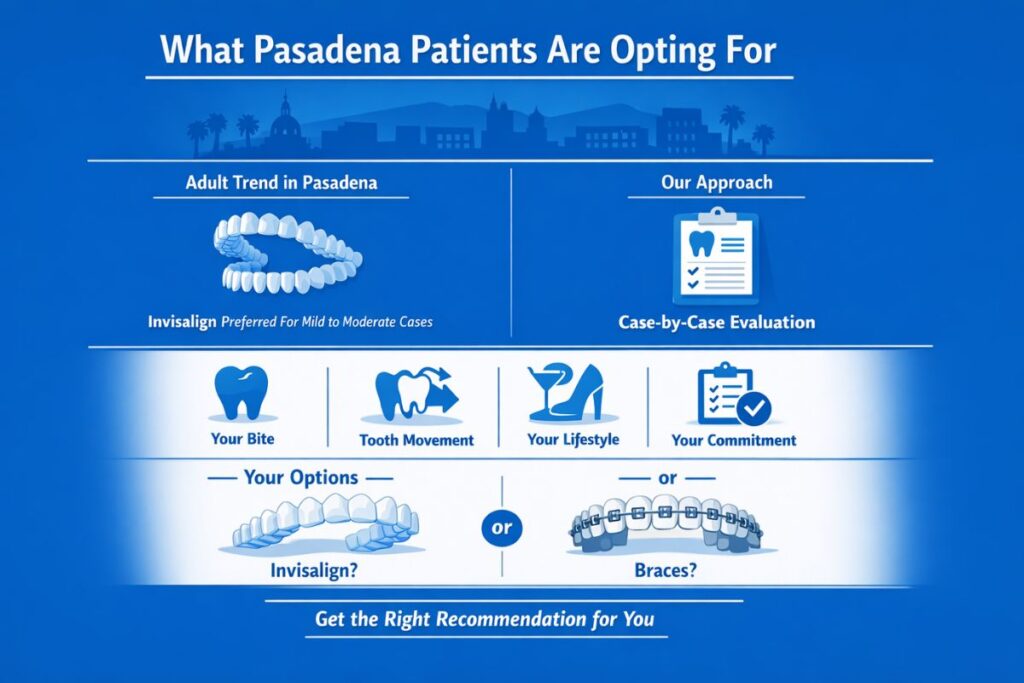
Pasadena has a wide range of patients seeking orthodontic treatment, from young professionals near Old Town to parents in Arcadia-adjacent neighborhoods who want a discreet option alongside their active social lives. The trend among adults is clearly toward Invisalign, particularly for mild-to-moderate alignment corrections.
That said, Blue Door Dental takes a case-by-case approach. There’s no one-size-fits-all answer here. What matters is your specific bite, the complexity of the tooth movement needed, your lifestyle, and your commitment to the treatment process.
An Invisalign dentist in Pasadena can tell you fairly quickly whether you’re a strong candidate for aligners or whether braces would give you a better result in less time. That assessment makes a real difference; choosing the wrong approach can unnecessarily extend your treatment timeline.
Questions to Ask Before You Decide
A few things worth thinking through before your consultation:
- How complex is your case? Mild crowding and spacing issues are well-suited to Invisalign. Significant bite correction often works better with braces.
- How disciplined can you be about wear time? If wearing trays for 20-22 hours daily feels realistic, Invisalign is a genuine option. If you’re unsure, braces may give you more consistent results.
- What does your daily life look like? Frequent public speaking, presentations, or client-facing work often makes the discretion of Invisalign a deciding factor.
- Are you an adult or a teenager? Invisalign Teen exists for younger patients, but compliance can be harder to maintain. Your dentist can help you assess this realistically.
- What’s your timeline? Both treatments typically run one to two years for most adult cases, but the specifics depend entirely on the complexity of your bite.
Neither Invisalign nor braces is universally better, they’re different tools for different situations. For many adults with mild to moderate alignment needs, Invisalign delivers excellent results with far less lifestyle disruption. For more complex bite corrections, braces offer precision that aligners can’t yet fully match.
The right answer is the one that fits your teeth, your habits, and your life.
Book a consultation at Blue Door Dental in Pasadena today and find out which path actually makes sense for your smile, with a clear, no-pressure assessment from a team that knows both options inside and out.
People Also Ask
Q: Can Invisalign fix my bite, or only straighten my teeth?
Invisalign can address certain bite issues, including mild overbites, underbites, and crossbites, but its effectiveness depends on the severity of the problem. Significant skeletal bite discrepancies or severe malocclusion often still require braces, sometimes in combination with other orthodontic appliances. Your dentist will assess your bite specifically and let you know what’s realistic with aligners versus brackets.
Q: Do retainers work the same way after Invisalign and braces?
Yes, both treatments require retainers afterward to maintain your results. Teeth have a natural tendency to shift back toward their original position after any orthodontic treatment. Most patients wear a removable retainer nightly for the long term. Some opt for a fixed wire retainer bonded behind the front teeth for added security. Skipping retainer wear is one of the most common reasons patients see their teeth shift after treatment.
Q: Is Invisalign painful?
Most patients describe a mild pressure or tightness when switching to a new tray, typically lasting a day or two. This is normal; it means the aligner is working. It’s generally less disruptive than the soreness after braces adjustments, which can last several days and affect chewing more noticeably.
Q: Can I whiten my teeth during Invisalign treatment?
Technically, yes, but with some caution. Some patients apply a small amount of whitening gel inside their trays, but this isn’t a formally recommended protocol and can cause uneven whitening or sensitivity if not done carefully. A better approach is to complete whitening after treatment is finished, when your final tooth position is stable. Talk to your dentist before attempting anything during treatment.
Q: What happens if I lose or break an Invisalign tray?
Contact your dental office as soon as possible. In most cases, your dentist will recommend moving to the next tray in the series or returning to the previous one, depending on where you are in the treatment cycle. Replacement trays can be ordered, but this may add time and a fee to your treatment. This is why keeping your previous tray until you’re confident in the current one is always a good habit.