A dental procedure can change the pace of your day in unexpected ways. Many patients schedule treatment during lunch breaks or between errands and assume they can simply drive themselves home afterward. The reality depends on the type of procedure and how your body responds to it. If you’re planning a visit to Blue Door Dental, knowing what to expect ahead of time can help you arrange safe transportation and avoid last-minute stress.
Pasadena is known for busy streets like Colorado Boulevard and Lake Avenue, where traffic can shift quickly. After a dental procedure, reaction time and focus matter just as much as physical comfort. The decision to drive yourself home should be based on how alert you’ll be after treatment, not just how close the office is to your home or workplace.
This guide walks through what affects your ability to drive, how different procedures can affect you, and what local patients often plan for aftercare.
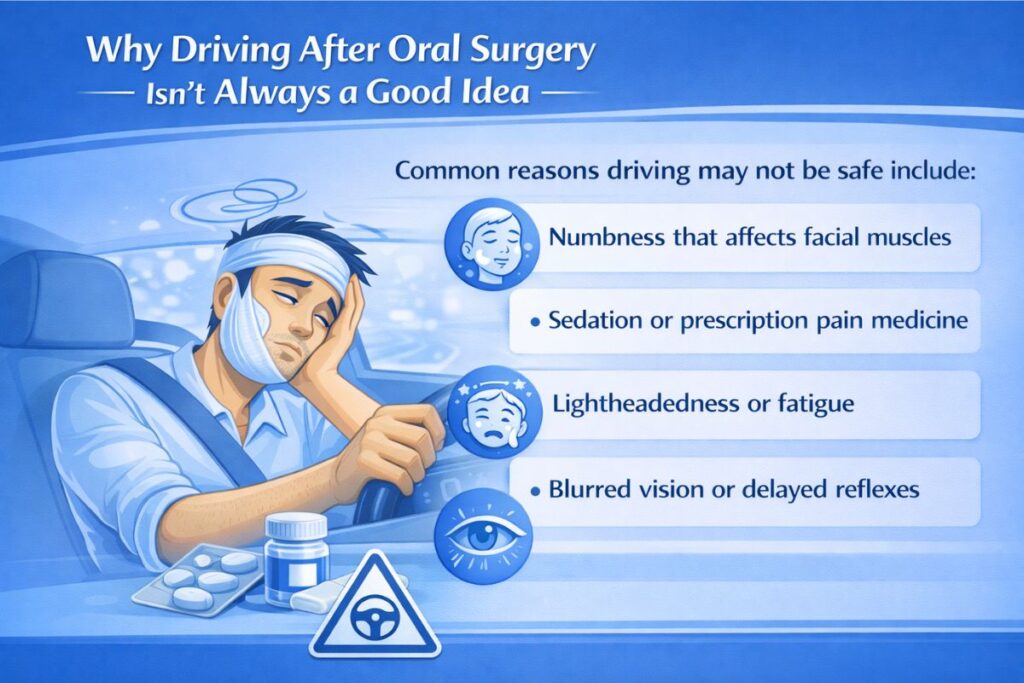
Why driving after oral surgery isn’t always a good idea
Even if the procedure feels routine, your body may still be under the influence of medication or physical stress. Driving requires coordination, judgment, and fast decision-making. After dental surgery, any of these can be temporarily reduced.
Common reasons driving may not be safe include:
- Numbness that affects facial muscles
- Sedation or prescription pain medicine
- Lightheadedness or fatigue
- Blurred vision or delayed reflexes
If your treatment involves a medication that causes drowsiness, you may feel alert at first, then suddenly feel tired. Pasadena drivers often encounter fast merges near busy intersections, making full awareness while on the road even more important.
The role of anesthesia and sedation
Whether you can drive post oral surgery in Pasadena depends heavily on how your procedure is performed.
Local anesthesia only
If only numbing medicine is used and no sedatives are involved, some patients feel well enough to drive. However, swelling or stress can still make driving uncomfortable or distracting.
Oral Sedation
Medication taken before treatment can stay in your system for several hours. Even if you feel okay, your ability to react quickly may be reduced.
IV sedation or deeper relaxation methods
These methods affect your awareness and coordination more strongly. Patients who receive them should always arrange a ride home.
Blue Door Dental provides guidance before treatment so patients know what level of medication will be used and how it may affect them.
How the type of procedure matters
Not all oral surgery has the same recovery needs. Some treatments cause minimal discomfort, while others involve more healing time.
Procedures that often require a ride home include:
- Tooth extractions
- Surgical treatments involving the gums
- Procedures that use sedation
- Multiple teeth treated in one visit
Even if pain is mild, swelling and numbness can make it hard to turn your head comfortably or stay focused behind the wheel.
Signs you should not drive after surgery
Pay attention to how your body feels before leaving the office. Driving is not recommended if you experience:
- Dizziness
- Heavy numbness
- Trouble focusing
- Drowsiness
- Nausea
Some people feel fine at first and then notice fatigue later. This is especially true if medication begins to wear off unevenly.
How to prepare ahead of time
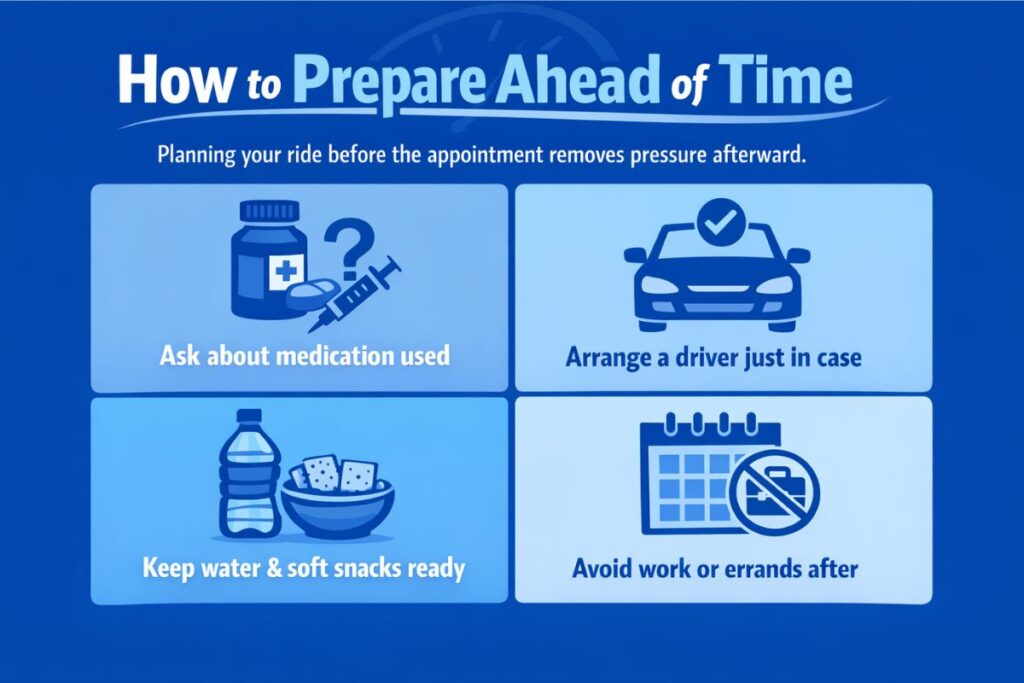
Planning your ride before the appointment removes pressure afterward.
Helpful steps:
- Ask what type of medication will be used
- Arrange a driver just in case
- Keep water and soft snacks ready at home
- Avoid scheduling work or errands afterward
Many Pasadena patients schedule procedures on lighter days or Fridays so they can rest without needing to travel again.
What if I feel “normal” afterward?
Feeling normal does not always mean your reflexes have fully returned. Sedation and stress can wear off slowly. Even with minimal pain, mental focus can be reduced.
Doctors advise patients not to test their limits behind the wheel. It is better to arrive home safely and rest than to risk an accident during recovery.
This is especially important after oral surgery in Pasadena, where streets can be crowded, and parking can require sharp turns or quick stops.
What about short procedures?
Short appointments do not always equal a quick recovery. A brief procedure using sedation still affects the body. The length of treatment matters less than the type of medication and how you personally respond to it.
Two people can have the same procedure and feel very different afterward. That’s why personal guidance from the dental team is important.
Why transportation planning helps recovery
The first few hours after treatment are important for healing. Getting home calmly helps prevent:
- Bleeding from sudden movement
- Increased swelling
- Fatigue from stress
Rest supports proper recovery and lowers the chance of complications.
Blue Door Dental encourages patients to think about safety beyond the treatment itself, including how they get home.
A simple rule of thumb
If sedation or prescription medication is involved, do not drive yourself home. Even if you feel alert, your body may still be adjusting.
If only numbing medicine is used, ask your dentist before leaving. They can assess whether driving is safe based on your condition.
Driving after dental surgery is not just about comfort. It is about safety, judgment, and recovery. Planning transportation in advance keeps your focus on healing instead of traffic.
If you are preparing for oral surgery in Pasadena and want to know what to expect before and after treatment, Blue Door Dental can provide clear guidance and help you plan a smooth visit from start to finish.
People Also Ask
1. Can I drive myself home if I only had a tooth removed?
It depends on whether sedation or strong medication was used. If you only had local numbing and feel alert, you may be allowed to drive. Always check with your dental team first.
2. How long should I wait before driving after sedation?
Most patients are advised not to drive for the rest of the day. Sedation can stay in your system longer than expected and affect reaction time even after you feel awake.
3. What if I live just a few blocks away?
Short distance does not reduce risk. Traffic, pedestrians, and signals still require focus. Having someone drive you is safer, even for nearby trips.
4. Can I use a rideshare service instead of bringing a friend?
Yes, many patients use rideshare services. Make sure you feel steady enough to walk and that you are not heavily sedated when leaving the office.
5. Will I know during the appointment if I can drive?
Yes. Your dental provider will let you know based on the medication used and your response during treatment.
6. Does pain medicine affect driving?
Prescription pain medicine can cause drowsiness or slower reflexes. Driving while taking it is not recommended.
7. Is walking home safe after surgery?
If numbness is mild and balance feels normal, walking short distances may be fine. If sedation was used, walking alone is not advised.