Bentonite clay is trending for oral health, but is it safe? Get the facts and discover teeth whitening in Pasadena that protects your enamel.
Natural wellness trends have a way of finding their way into oral care, and bentonite clay is no exception. It’s showing up in homemade toothpaste recipes, wellness blogs, and TikTok routines pitched as a gentle, toxin-pulling alternative to conventional dental products. The appeal is understandable – it sounds earthy, clean, and simple.
But your enamel doesn’t care about wellness trends. Enamel is the hardest substance your body produces, and it doesn’t regenerate once it’s gone. So, before you swap your toothpaste for clay, it’s worth looking at what bentonite actually does and doesn’t do in your mouth.
What Bentonite Clay Is and Why People Use It?
Bentonite is a soft, naturally occurring clay formed from volcanic ash. People have used it for centuries across cultures for skin care, detoxification, and digestive health. More recently, people have promoted it for oral health, claiming it whitens teeth, remineralizes enamel, and kills harmful bacteria.
Some of those claims have a partial basis in fact. Bentonite clay does have a negative electrical charge, which allows it to bind to positively charged particles, including some toxins and heavy metals. It also contains trace minerals, calcium, magnesium, and silica, important for remineralization.
For patients exploring teeth whitening in Pasadena at Blue Door Dental, these claims often come up during consultations. And the question is always the same: Does the science actually back this up for dental use?
The short answer is: not convincingly.
Where the Science Gets Complicated
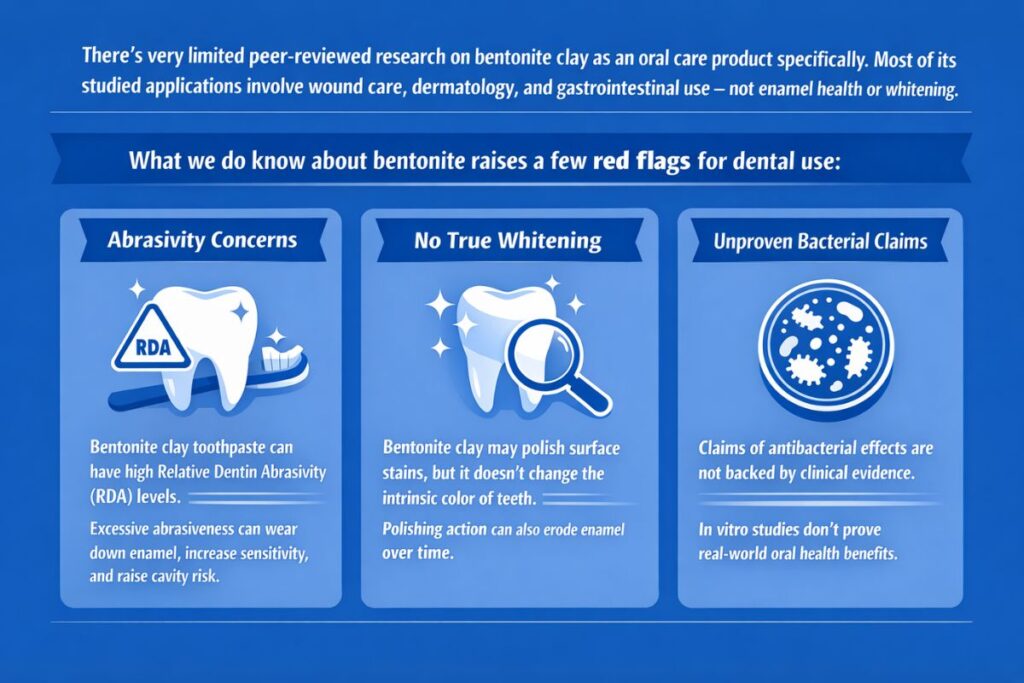
There’s very limited peer-reviewed research on bentonite clay as an oral care product specifically. Most of its studied applications involve wound care, dermatology, and gastrointestinal use – not enamel health or whitening.
What we do know about bentonite raises a few red flags for dental use:
The abrasivity concern is real. Toothpastes are rated on a scale called Relative Dentin Abrasivity (RDA). The American Dental Association recommends that a daily-use toothpaste stay below an RDA of 250, with safer options sitting well under 150. Bentonite clay’s RDA hasn’t been standardized across products, but clay-based pastes have shown widely varying abrasivity levels, and some formulations have tested significantly higher than the recommended level. Brushing daily with an abrasive substance gradually wears down enamel, leading to increased sensitivity, yellowing (as the underlying dentin becomes more visible), and a higher risk of cavities over time.
It doesn’t whiten the way people think. Bentonite clay may remove some surface staining through its mild abrasive action, similar to how baking soda works. But that’s not true whitening – it’s polishing. It doesn’t change the intrinsic color of your teeth, and the abrasivity that creates the polishing effect is the same thing that puts enamel at risk with long-term use.
Bacterial claims lack clinical support. Some proponents suggest bentonite clay has antimicrobial properties. Limited in vitro research shows activity against certain bacteria, but in vitro studies (conducted in a lab, not in the human mouth) don’t reliably translate to real-world oral health benefits. No clinical evidence currently supports the use of bentonite clay as an effective tool for reducing oral bacteria compared with fluoride toothpaste.
What Pasadena Patients Should Know
Pasadena’s strong wellness community draws many residents to products that feel intentional and less synthetic. That instinct isn’t wrong – being thoughtful about what you put in your body is worth something. But in dentistry, “natural” doesn’t automatically mean safer or more effective.
Enamel erosion is one of the most common issues dental professionals see, and it’s largely irreversible. Once enamel wears down, your options narrow significantly. The treatments to manage enamel loss, like sensitivity management, bonding, and veneers, are far more involved than whatever you were hoping to avoid by going natural in the first place.
Teeth whitening in Pasadena at Blue Door Dental uses clinically tested, enamel-safe bleaching agents that are regulated and studied specifically for dental use. You achieve measurable results with safe protocols, keeping your enamel protected throughout the process, something a clay paste simply can’t promise.
Practical Guidance If You’re Still Curious About Clay
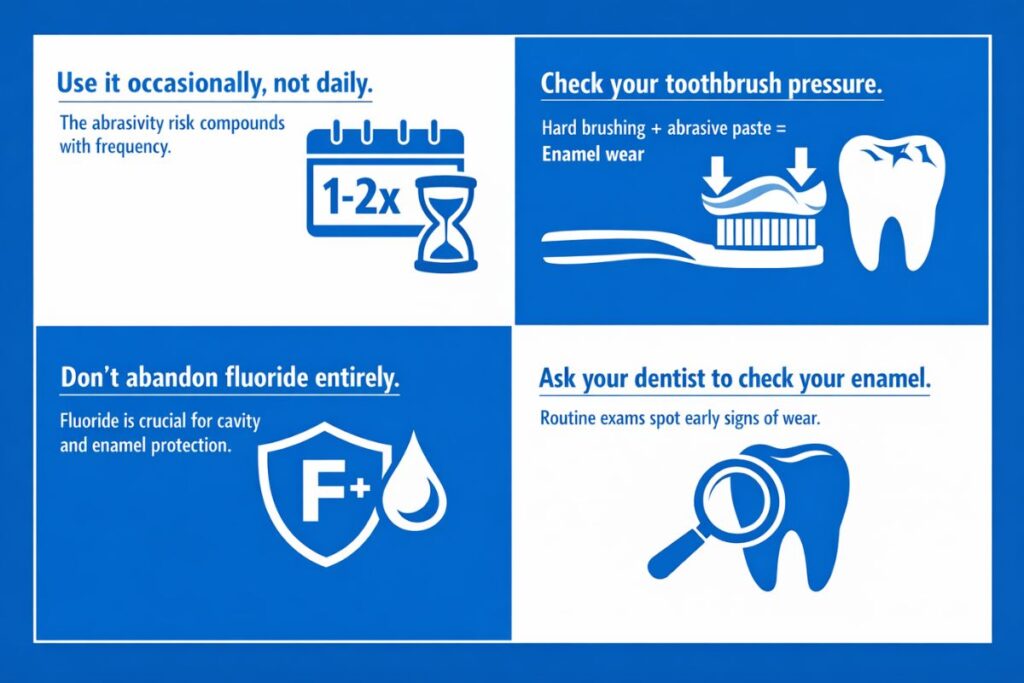
If you’ve already been using a bentonite clay toothpaste and like it, a few practical things to consider:
- Use it occasionally, not daily. The abrasivity risk compounds with frequency.
- Check your toothbrush pressure. Combining an abrasive paste with hard brushing accelerates enamel wear.
- Don’t abandon fluoride entirely. Fluoride remains the most evidence-backed mineral for cavity prevention and enamel protection. If you’re using clay paste exclusively, you’re missing that protection.
- Ask your dentist to check your enamel. A routine exam can catch early signs of wear before they become a bigger problem.
Your Smile Deserves More Than a Trend
The wellness space moves fast, and the dental aisle isn’t immune to it. Charcoal, oil pulling, and clay – they cycle through, each with enthusiastic supporters and limited clinical evidence. Some are relatively harmless. Others carry real risks that take years to show up.
If brighter, healthier teeth are the goal, book a consultation at Blue Door Dental in Pasadena. Get a clear picture of your enamel health, and find out which whitening approach is actually right for you – no guesswork, no risk.
People Also Ask
Q.1: Can bentonite clay be used safely alongside regular toothpaste?
Occasional use as a supplement, rather than a replacement for fluoride toothpaste, carries a lower risk. However, there’s no established protocol for combining the two, and the abrasivity concern still applies. If you enjoy clay for its texture or flavor, choose formulations that are RDA-tested and stay within ADA-recommended ranges.
Q.2: Does oil pulling work better than bentonite clay for oral health?
Oil pulling – swishing with coconut or sesame oil has more research supporting it than bentonite clay for oral use, though the evidence remains modest. Some studies suggest oil pulling may modestly reduce plaque and gingivitis bacteria. It’s generally low-risk and doesn’t pose the same abrasivity concerns as clay. That said, neither replaces brushing with fluoride toothpaste, flossing, or professional care.
Q.3: Are there any natural ingredients that are actually supported by dental research?
Yes. Xylitol is a naturally derived sugar alcohol with solid research supporting its ability to reduce cavity-causing bacteria. Fluoride, while often classified as a chemical in wellness discourse, occurs naturally in water and soil and has the strongest body of evidence for enamel protection among oral care ingredients. Hydroxyapatite, a mineral that makes up enamel itself, is also gaining solid research support as a remineralizing agent.
Q.4: Is enamel erosion reversible?
No. Unlike bone, enamel doesn’t regenerate; the cells that produce it (ameloblasts) are no longer active after teeth fully form. Early enamel softening can be partially reversed with fluoride or hydroxyapatite, but true enamel loss is permanent. This is why dentists focus so strongly on prevention, it’s much easier to protect enamel than to manage the effects of losing it.
Q.5: How do I know if my enamel is already thinning?
Common signs include increased tooth sensitivity (especially to cold, heat, or sweets), teeth that appear more yellow or translucent near the edges, and a rougher tooth surface texture. Your dentist can detect early enamel wear during a routine exam, often before you notice symptoms. If you’ve been using abrasive products for an extended period, it’s worth bringing up at your next visit.