Most people don’t realize their jawbone is already shrinking after tooth loss. It happens silently — no pain, no obvious warning. But if you’ve lost a tooth and haven’t replaced it, your jawbone is actively changing right now. Understanding when implants become urgent in Pasadena could save your smile and your long-term oral health.
Dr. Thomas Pacheco at Blue Door Dental sees this situation often. Patients come in thinking they have time to decide. Many of them have already lost significant bone volume. The good news is that acting now — even if you’ve waited a while — can still make a difference.
Why Your Jawbone Is Shrinking After Tooth Loss
Your jawbone needs stimulation to stay healthy. Every time you bite or chew, your tooth roots send pressure signals into the bone. That stimulation tells your body to keep renewing bone tissue in that area.
When a tooth is removed, those signals stop immediately. Without stimulation, the body begins reabsorbing the bone. This process is called resorption, and it starts within the first few months after extraction.
Studies show the jawbone can lose up to 25% of its width in the first year alone. Over time, that bone loss accelerates and spreads. Eventually, it can affect neighboring teeth and the overall structure of your face.
Dental implants are the only tooth replacement that replicates root stimulation. They stop bone loss by integrating directly into the jaw. That’s what makes them medically different — not just cosmetically better.
Warning Signs You’ve Already Waited Too Long for Implants in Pasadena
It can be hard to notice bone loss on your own. But certain signs suggest the process is already well underway. Pay close attention if you recognize any of these in yourself.
- Shifting or drifting teeth — Neighboring teeth begin to lean into the gap left by a missing tooth.
- Difficulty chewing or biting — Your bite feels uneven or you avoid certain foods entirely.
- A sunken appearance in your cheeks or jaw — Bone loss changes the shape of your lower face over time.
- Loose-fitting dentures or partials — The ridge that supports your denture is flattening due to bone loss.
- Gum recession around the gap — The gum tissue pulls back when bone beneath it shrinks.
- Increased sensitivity in nearby teeth — Shifting teeth can expose root surfaces to pressure and temperature.
If you recognize two or more of these signs, don’t wait any longer. Each month without a replacement tooth means more structural change in your jaw. The window for a straightforward implant procedure narrows over time.
What Happens If You Keep Waiting
Delaying implant treatment doesn’t just mean a longer procedure later. It can mean a fundamentally more complex one. Severe bone loss may require bone grafting before an implant can even be placed.
Bone grafting adds time, cost, and recovery to your treatment plan. Some patients with advanced bone loss may not be candidates for standard implants at all. Early action is always the simpler path.
Beyond the jaw itself, shifting teeth create new problems. Crooked teeth are harder to clean, which raises the risk of decay and gum disease. The gap from one missing tooth can eventually destabilize several others.
There are also functional consequences. Patients who avoid chewing on one side of their mouth often develop jaw muscle imbalances. Some develop chronic jaw pain or clicking — early signs of TMJ dysfunction.
How Dental Implants Stop the Damage in Pasadena
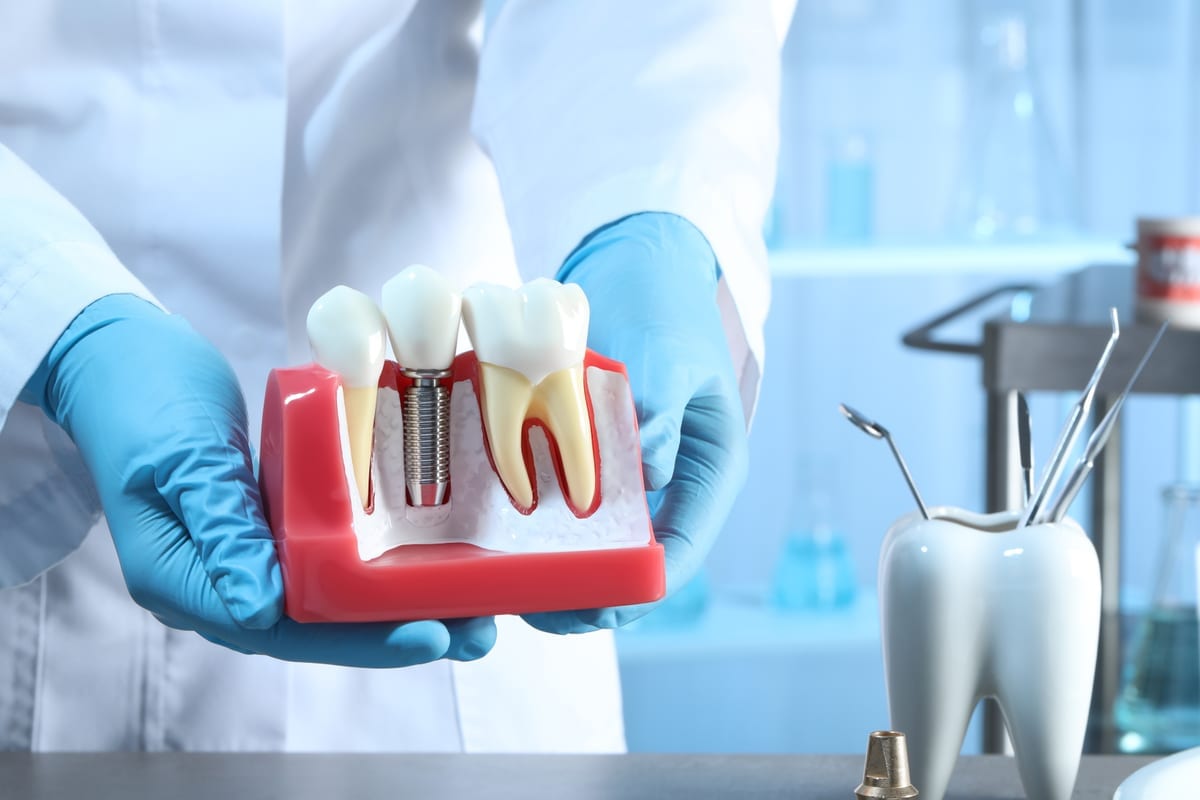
A dental implant is a small titanium post placed directly into the jawbone. Over a few months, the bone fuses around it in a process called osseointegration. Once fused, the implant acts exactly like a natural tooth root.
This means bone stimulation resumes. Resorption slows or stops entirely. The surrounding teeth no longer have an empty space to drift toward. Your bite stabilizes, and your face retains its natural contours.
Dr. Pacheco at Blue Door Dental provides comprehensive implant care in Pasadena. From initial assessment through final restoration, the process is guided with precision and patient comfort in mind. The goal is always to preserve as much natural bone as possible.
Implants also pair well with other treatments. Patients who want to improve their overall smile may combine implants with Cosmetic Dentistry options like veneers or teeth whitening. Addressing the structural foundation first makes every cosmetic result more stable and lasting.
What to Expect During Your Implant Consultation
The first step is a thorough evaluation. Dr. Pacheco will take digital X-rays and assess your current bone volume. This tells us exactly how much bone remains and what your treatment options look like.
Here’s a general overview of what your consultation will cover:
- Bone density and volume assessment — Using imaging to measure available bone.
- Medical and dental history review — Identifying any factors that could affect healing.
- Treatment planning discussion — Walking through your options clearly and honestly.
- Timeline and next steps — Setting realistic expectations for your specific situation.
If bone grafting is needed, that will be explained thoroughly. Many patients are surprised to find they still qualify for implants even after years of waiting. The consultation removes the guesswork and gives you a clear path forward.
If you are dealing with dental pain or swelling alongside your missing tooth, that needs attention first. Emergency Dentistry can address acute issues quickly so that implant planning can begin without delay.
Frequently Asked Questions
How quickly does bone loss start after a tooth is extracted?
Bone resorption begins within the first few weeks after tooth loss. The most significant changes happen in the first six to twelve months. Acting within that window gives you the best chance of a straightforward implant placement without grafting.
Can I still get a dental implant if I’ve had a missing tooth for several years?
In many cases, yes — but it depends on how much bone remains. Dr. Pacheco will evaluate your bone density with imaging during your consultation. If bone loss is significant, a bone graft may be needed before the implant is placed. Many long-term tooth-loss patients still qualify for implants with proper preparation.
Are dental implants painful to place?
Most patients are surprised by how manageable the procedure is. Local anesthesia is used during placement, so you won’t feel pain during the process. Some soreness and swelling occur in the days after, but most patients return to normal activities quickly. Dr. Pacheco’s team prioritizes comfort throughout the entire process.
How do I know if my shifting teeth are caused by bone loss?
Teeth shifting after a neighboring tooth is lost is a strong indicator of bone changes. Other signs include changes to your bite, gaps forming between teeth, or increased sensitivity. A dental exam with X-rays can confirm whether bone loss is driving the movement. Don’t assume shifting is minor — it signals a structural problem that worsens over time.
What makes dental implants better than dentures for bone loss?
Dentures and bridges sit on top of the gum and do not stimulate the jawbone. This means bone loss continues even after you’ve replaced the tooth visually. Implants are anchored directly into the bone, mimicking natural tooth roots. That stimulation tells the body to maintain bone tissue, effectively halting the resorption process that dentures cannot stop.
If you’ve been putting off replacing a missing tooth, now is the time to take action. Bone loss is not reversible on its own — but it is stoppable. Dr. Thomas Pacheco and the team at Blue Door Dental are here to help you understand your options with honesty and care. Book Now to schedule your appointment with our team.